
BRICS leaders, in their New Delhi Declaration 2026, have called for wider access to Artificial Intelligence resources and stronger international cooperation to ensure the technology is safe, secure, inclusive, and reliable. The declaration outlines a broad technology agenda covering AI, cybersecurity, digital public infrastructure, telecom, quantum technologies, and advanced manufacturing, committing to implement the grouping's statement on 'Global Governance of Artificial Intelligence'.

Arunachal Pradesh Chief Minister Pema Khandu lauded the state's first 10-day artificial intelligence boot camp and hackathon at IIT-Guwahati. The programme aims to build AI skills, promote innovation, and create a future-ready digital workforce, offering hands-on training in AI/ML, Python, and NLP to 40 young participants.

Karnataka IT Minister Priyank Kharge reviewed preparations for the 29th Bengaluru Tech Summit 2026, themed "AI & Beyond." The summit, scheduled for November 17-19, 2026, will feature over 1,800 exhibitors, focusing on AI, DeepTech, biotechnology, electronics, robotics, and startups, aiming to foster innovation and collaboration.
Cars24 has announced the launch of its AI Labs, backed by a USD 20 million investment, to foster AI innovation and support startups in the field.

The idea addresses an increasingly difficult problem on Earth: Data centres consume enormous amounts of electricity and water.
Jeh Aerospace has inaugurated its Tooling Centre of Excellence in Hyderabad, expanding its capacity for critical aero-engine tooling. The new centre, opened by Telangana Minister D Sridhar Babu, will design, manufacture, and inspect tooling assemblies for aero-engine manufacturing and ground support engineering, aiming to accelerate new programmes and create specialised jobs.

Competition Commission of India (CCI) chairperson Ravneet Kaur has warned that the rapid adoption of artificial intelligence (AI) could intensify anti-competitive practices in digital markets, including self-preferencing, discriminatory pricing, and market manipulation. She highlighted the CCI's ongoing study into AI's impact on competition and stressed the regulator's role in fostering growth while preventing abuse of dominance.
Hindustan Zinc Ltd (HZL) plans to generate 2,000 crore in value by implementing artificial intelligence-driven solutions across its mining and manufacturing operations. This initiative is part of a broader industry trend to adopt digital technologies for cost reduction, margin improvement, and enhanced environmental and social governance.
Karnataka Chief Minister D K Shivakumar met with AI major Anthropic to discuss a long-term partnership aimed at accelerating AI adoption across governance, education, healthcare, research, and the state's startup ecosystem. The collaboration focuses on deploying AI solutions responsibly, ensuring data privacy, and developing AI-focused skilling programmes and an AI University.

'Companies are getting selective about what they pay a premium for.'
Indegene has been announced as the inaugural industry partner for the India-UK Life Science Corridor, a collaborative initiative between the Centre for Cellular and Molecular Platforms (C-CAMP) and Imperial College London. This partnership aims to foster cross-border innovation, knowledge exchange, and talent development in critical areas like digital health and antimicrobial resistance, leveraging Indegene's expertise in life sciences.

Roles that mention AI in software development have grown 138 per cent between Q2 2024 and Q2 2026.

Arundhati Bhattacharyya, Salesforce President and CEO for South Asia, highlighted how cloud and AI are democratising capabilities, offering India a unique opportunity to leapfrog in the technology revolution. Speaking at the IMC Chamber of Commerce, she emphasised that AI will create more jobs by addressing unmet business demands and could significantly boost India's GDP, with NITI Aayog estimating a USD 500-600 billion addition by 2035. She urged Indian businesses to transform using technology, focus on data, redesign work, and invest in skills, stressing that AI is not just for large corporations.
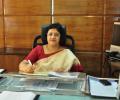
Arundhati Bhattacharya, Salesforce President and CEO for South Asia, stated that cloud and AI are democratising capabilities, offering India a unique opportunity to leapfrog in technology. Speaking at the IMC Chamber of Commerce, she emphasised that AI will create more jobs and urged Indian businesses to transform using technology, rather than merely digitising. She also highlighted the significant economic potential of AI adoption for India.
Gaganyaan astronaut Prasanth Balakrishnan Nair stressed the critical importance of AI sovereignty for national cybersecurity, citing the increasing difficulty in distinguishing between real and fake content due to AI. Speaking at the Kerala Cyber Suraksha Summit, Nair highlighted that future conflicts and industries would involve a 'whole-of-nation approach,' blurring physical and digital boundaries. He urged greater awareness of digital threats and emphasised India's need to build on its technological capabilities in AI and cybersecurity, drawing parallels with the success of Chandrayaan-3. Other speakers also underscored the rising threat of cyberattacks and the potential for Kerala to contribute to national technology requirements.

Artificial intelligence (AI) is significantly increasing the demand for flexible office spaces in India, as enterprises prioritise agility, speed-to-market, and struggle with forecasting workforce requirements. AI-native startups are a primary driver, while established companies are adopting 'core-plus-flex' strategies to balance stability with adaptability.

Temple, a wearable startup by Zomato co-founder Deepinder Goyal, is facing significant scientific scrutiny from doctors regarding its Rs 85,000 forehead-worn device. Critics question the evidence behind its claims of measuring brain blood flow and providing insights into ageing, with prominent hepatologist Cyriac Abby Philips calling it a "scam." Goyal has defended the technology, stating it's a fitness and wellness device, not medical, and that metrics await clinical validation, while also addressing pricing and scientific methodology.

Karnataka Chief Minister D K Shivakumar announced the establishment of India's first government-driven Artificial Intelligence University and an AI Hub in Bengaluru. This initiative aims to position Karnataka as a global leader in responsible AI innovation, fostering talent, research, and collaboration. The state seeks to become an AI-native state, leveraging AI to improve governance and daily life across various sectors.

Sarvam AI, an Indian full-stack sovereign artificial intelligence company, has achieved unicorn status after raising $234 million in a Series B funding round led by HCLTech and Bessemer Venture Partners, with HCLTech acquiring a 10.46 per cent stake.

The Government of Karnataka has called for enhanced collaboration with the BFSI and FinTech sectors to bolster its technology ecosystem and accelerate the adoption of innovative solutions. This initiative, discussed at an Industry Meet, aims to foster partnerships between government, industry, and academia, particularly through programmes like 'Government First', in preparation for the Bengaluru Tech Summit 2026.

Can AI transform grassroots 'If technology can help develop players a little quicker and make coaching more informed, then it has done its job.'

The technology startup ecosystem in India attracted $7.2 billion in funding during the first half of calendar year 2026, marking a 12 per cent year-on-year (Y-o-Y) increase. However, even as funding increased, deal count fell sharply, according to a report by market intelligence platform Tracxn.

Country's startups are carving a unique path by prioritising local, application-led innovation over the global pursuit of scale.

Estonian tech startups in AI, cybersecurity, defence, and medicine are showing interest in collaborating with India, aiming to tap into its vast market. Latitude59, a prominent startup conference, is considering hosting a networking event in India next year to foster these partnerships.

The aim is to win over the country's enterprises, developers and startups as AI systems shift from answering questions to autonomously executing tasks.

Indian startup funding plummeted by 43 per cent year-on-year to $7.81 billion between March 1 and June 15, 2026, largely due to the West Asia conflict, which has amplified global risk perceptions, tightened liquidity, and led to rupee depreciation, making global investors cautious.

Uttar Pradesh Chief Minister Yogi Adityanath announced the state's ambitious shift from mobile phone assembly to advanced microchip manufacturing, data centres, and artificial intelligence. He highlighted significant investments and growth in the digital economy, attributing the transformation to the "double-engine government's" alignment with national initiatives like 'Make in India' and 'Aatmanirbhar Bharat'. Adityanath also criticised previous administrations for hindering the state's potential.

Fintech firm Razorpay has secured approval from markets regulator Sebi for its proposed initial public offering (IPO) of Rs 5,000-6,000 crore, targeting a valuation of around USD 5 billion. The company, founded in 2014, offers various financial services and attained unicorn status in 2020. This development follows its confidential IPO filing in June, while rival PhonePe's IPO is currently on hold.

ISRO Chairman V Narayanan announced India's plan to significantly expand its space operations with four functional launch pads by 2029, including a new SSLV complex at Kulasekarapattinam. He stressed the importance of private sector partnerships to meet global demand and foster economic growth. Narayanan also detailed upcoming Gaganyaan uncrewed tests within the next two months and revealed plans for a collaborative Chandrayaan-5 lunar mission with Japan.
Haryana Chief Minister Nayab Singh Saini met with a World Bank delegation to discuss advancing Artificial Intelligence, digital governance, and skill development in the state. The discussions focused on leveraging technology to enhance citizen services, with plans to showcase Haryana's AI Sandbox globally and develop a dedicated AI model for the state.
HCLTech, India's third-largest IT services company, announced plans to establish a global technology centre and an AI-optimised data centre in Bhubaneswar, Odisha, with a total investment of approximately Rs 15,000 crore, marking its entry into the AI infrastructure business.

India aims to become a globally competitive and technologically self-reliant semiconductor powerhouse by 2047, leading in next-generation chip technologies. This vision, highlighted at the ESTIC 2026 conclave where DRDO played a key role, focuses on developing a sustainable semiconductor ecosystem, creating high-value jobs, and ensuring digital security and economic strength through indigenous chip capabilities.

Advanced Impactor. an AI-powered platform, aims to modernise cricket coaching with real-time performance analytics.

Niti Aayog has launched the India Science and Technology (S&T) Scoreboard, highlighting state-wise performance in research publications and patent applications. Tamil Nadu, Uttar Pradesh, and Maharashtra are the top three states in research publications, with Tamil Nadu also leading in patent filings. The interactive platform aims to help states benchmark progress and formulate better S&T policies.
Researchers at the Indian Institute of Technology Bombay have developed an innovative, low-cost device capable of screening for anaemia and sickle cell disease using just a single drop of blood. This point-of-care approach measures blood smear length to detect differences in viscosity, which are indicative of these conditions. The patented device is designed for cost-effective manufacturing and ease of use, making it ideal for areas with limited access to conventional diagnostic laboratories. The technology is currently licensed to an IIT Bombay startup and is moving towards regulatory approval.

IIT Ropar's ANNAM.AI, in collaboration with Syngenta and Google, has launched 'HACK CORE 2026', a national AI hackathon. It invites innovators to develop AI-driven solutions for critical agricultural challenges like crop health, pest management, and climate-resilient farming, offering significant prizes and mentorship.

An Indian AI Research Organisation official says India has adopted a balanced and pragmatic approach to AI regulation, avoiding the extremes of the US and EU models.

Assam Chief Minister Himanta Biswa Sarma launched the North East Seva Innovation Challenge (NESFIC), envisioning the region as India's 'living laboratory' for technology and problem-solving. The initiative aims to empower young innovators to address real-world challenges faced by government, industries, and citizens, with a focus on practical implementation and government procurement.

WazirX founder Nischal Shetty stated, "We have outdone ourselves, but it is a journey we are still on, and there is a long way to go," reflecting on the cryptocurrency exchange's year-long journey since restarting operations after a cyberattack and restructuring.

The Bangalore Water Supply and Sewerage Board (BWSSB) is set to explore the use of AI, predictive analytics, and robotic inspection technologies to detect water theft, reduce leakages, and improve operational efficiency across Bengaluru's water distribution network.
